What you will find
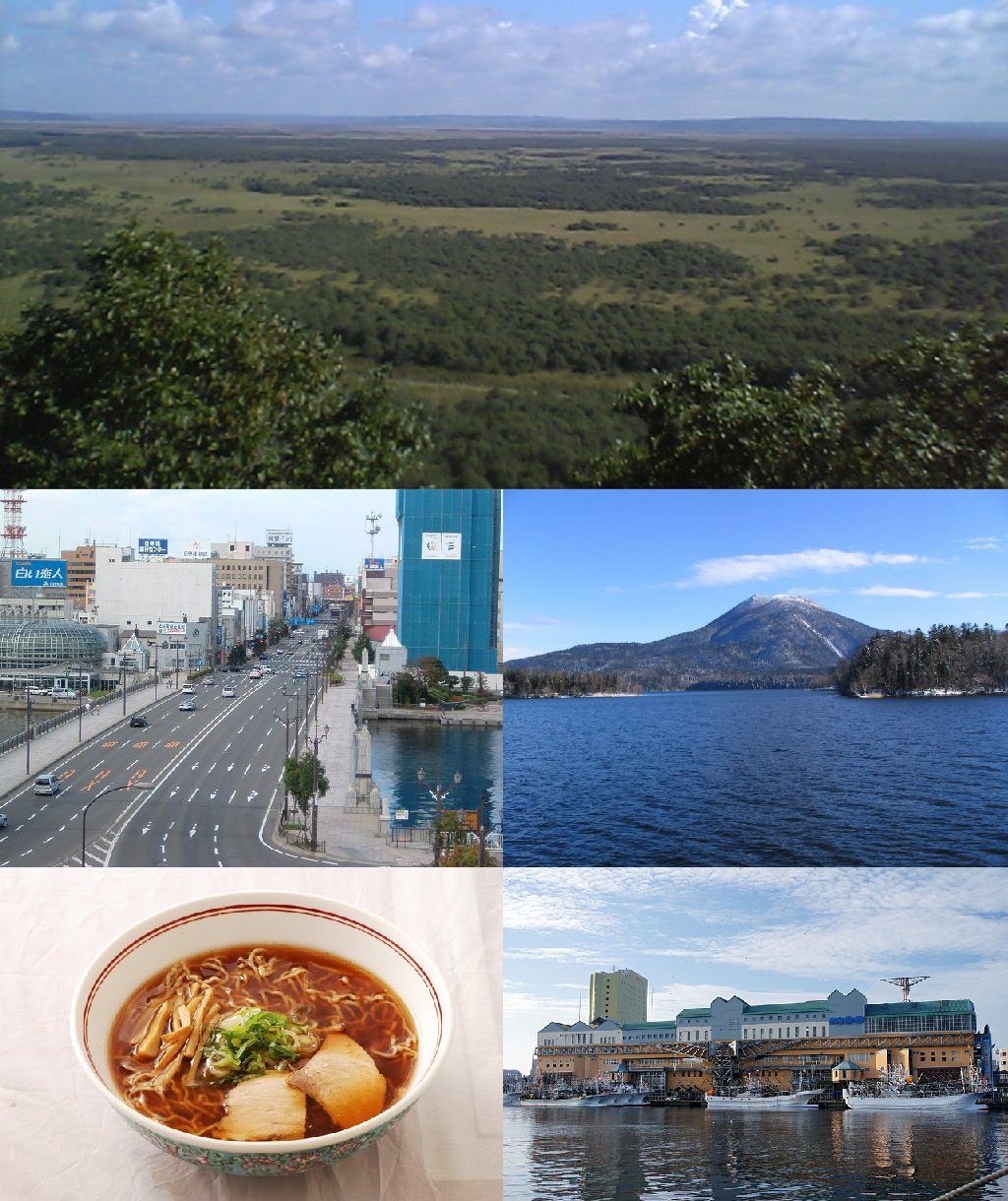
Golden Kamuy's hunt keeps pushing east, and Kushiro is the gateway to its wildest country: the great marsh that shelters the red-crowned cranes, and beyond it Lake Akan and the Nemuro coast, where the story's Ainu kotan, Russian border tensions and prison breaks play out in fog and reed beds. The manga treats eastern Hokkaido as the edge of the map, and Kushiro — a fishing and paper port wrapped in sea fog — is its last big town.
Stand on Nusamai Bridge at sunset, the city's emblem over the harbour, then take the bus or the summer norokko train into Kushiro Marsh, Japan's largest wetland. The cranes, deer and empty horizons explain why the story's characters keep disappearing into this landscape and why fortunes could hide in it.
Visiting notes: the marsh observatories and boardwalks are the practical way in; carry insect repellent in summer and warm layers even then — Kushiro is famously cool. Trains east of Kushiro are few, so plan the day around the timetable rather than the other way round.
Facts
| Location | Kushiro, Hokkaido (Hokkaido) |
|---|---|
| Series | Golden Kamuy |
| Nearest station | Kushiro Station |
| Getting there | Kushiro Station (JR Nemuro / Senmo lines); the marsh observatories are reached by bus or the seasonal norokko train. |
| On foot / last leg | Nusamai Bridge about 15 minutes on foot from Kushiro Station; marsh by bus or seasonal train |
| Opening hours | Open at all times — public streets and harbour; observatory hours vary by facility |
| Admission | Free — public streets; observatory fees vary (typically a few hundred yen) |
Practical details checked on 9 November 2026 against official or official-tourism sources where shown. Hours and fees can change — the official site, where linked, is the final word.
About this place
Kushiro (釧路市, Kushiro-shi; Japanese pronunciation: [kɯ̥̈.ɕí.ɾò̞, -ɕì.ɾò̞, -ɕí.ɾó̞.ɕì]) is a city in Kushiro Subprefecture on the island of Hokkaido, Japan. Located along the coast of the North Pacific Ocean, it serves as the subprefecture's capital and it is the most populated city in the eastern part of the island. As of 31 October 2025, the city had an estimated population of 151,833 in 90771 households, and a population density of 111 people per km2. The total area of the city is 1,363.26 km2 (526.36 sq mi).
== Geography ==
Background text: Wikipedia contributors, Wikipedia, CC BY-SA 4.0.